
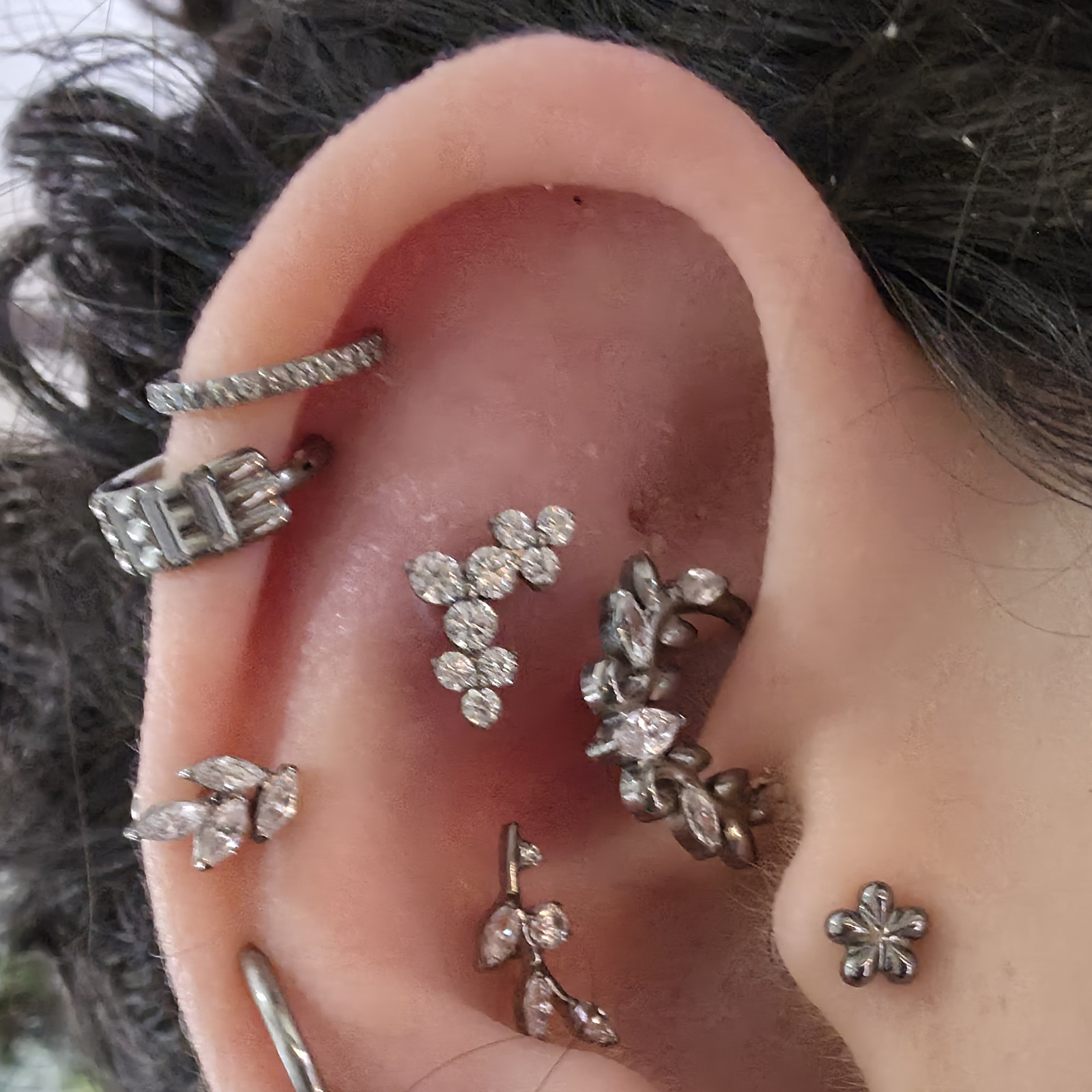
Lobes are the friendliest piercing there is. They sit in soft tissue with a generous blood supply, they heal faster than anything else on the ear, and they forgive mistakes that cartilage would hold against you for a year. That reputation is also why they are the piercing people put the least thought into, and why so many perfectly ordinary lobe piercings end up sore, weepy or lumpy for months.
This guide covers what to buy for a newly pierced lobe, when it is safe to change, and what to do if the studs you were sent home in are the problem. Written for Australian buyers, in Australian dollars.
The short answer
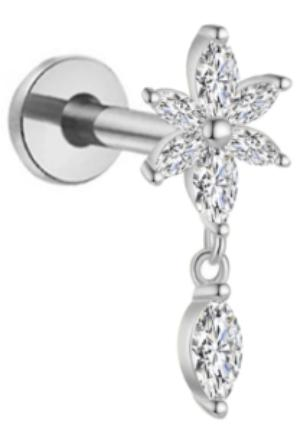
Wait until the lobe is healed, usually six to eight weeks, then change into an implant grade titanium flat back labret in 18 gauge or 16 gauge to match how you were pierced, in 6mm or 8mm depending on the thickness of your lobe. Do not change earlier than that, do not put in a hoop yet, and do not put in anything you cannot identify the metal of.
Start with how you were pierced
Two things about your original piercing determine what you can buy afterwards, and it is worth knowing them before you shop.
Gauge
Gauge is the thickness of the bar, and the numbering runs backwards, so a bigger number is thinner. Most lobes in Australia are pierced at 18 gauge, which is 1.0mm, or 16 gauge, which is 1.2mm. Studios that pierce with a needle often use 16 gauge. Piercing guns, which are common in shopping centres and pharmacies, typically use a thinner 20 gauge stud.
Match what you have. Going thinner lets the channel shrink around a smaller post, which means the piercing slowly closes down and you cannot go back without stretching it again. Going thicker means forcing a bar through a channel that is not big enough, which hurts and tears tissue. If you genuinely do not know, a piercer will tell you in thirty seconds for free, and my guide to gauges explains the numbering.
Length
Lobes vary a lot in thickness between people, which is why length is not one size fits all. Most lobes are comfortable in a 6mm post. Thicker lobes need 8mm. A fresh piercing will have been fitted with the longer size deliberately, to leave room for swelling, and that extra length should come out once the swelling has gone. The size guide shows exactly what is being measured.
When can you actually change them?
A lobe usually takes six to eight weeks to heal enough for a first change, and some take a little longer. The calendar is a guide, not a rule. What you are looking for is a piercing that is completely calm: no tenderness when you touch it, no crusting in the morning, no swelling, and no reaction when you sleep on that side.
Changing too early is the single most common way people turn a straightforward lobe into a problem. The channel inside a healing piercing is fragile new tissue, and pushing jewellery through it before it has toughened tears it and starts the clock again. If you are impatient, wait another fortnight. It costs you nothing and it will save you months.
If you were pierced with a gun and the studs feel tight against your lobe, that is worth having looked at sooner rather than later. Gun studs are often too short to allow for swelling, and a stud pressing into a swollen lobe is a genuinely common source of trouble. A piercer can swap you into something correctly sized without waiting for full healing.
What to buy
The piece: a flat back labret
A flat back labret is a straight post with a smooth disc behind the ear and a decorative top on the front. It has no clasp, nothing sticking out at the back, and nothing to fall off in bed. For a lobe that has just healed, it is far and away the most comfortable option, and it is what most piercers recommend.
The alternative you were probably sent home in is a butterfly back, the little sprung clasp that comes on almost every earring sold in Australia. Those wings press into the back of your lobe when you sleep, they trap product and dead skin in the gap, and they come off in bed constantly. Switching away from them is the biggest single upgrade in comfort most people ever make to their ears.
The metal: implant grade titanium
Implant grade titanium, properly specified as ASTM F-136, contains no nickel at all. That matters more than it sounds, because a recently healed piercing is exactly the situation in which people develop nickel allergies in the first place. Nickel sensitivity is not something you are born with. It builds through repeated contact, and once you have it, it is permanent.
Surgical steel, which is what most cheap studs are, contains somewhere between eight and twelve percent nickel. Gold plated earrings are usually plating over brass or nickel alloy, and when the plating wears you meet what is underneath. If you want the full comparison, I have written about which one to actually buy and about what is safe for a piercing.
The top: keep it simple at first
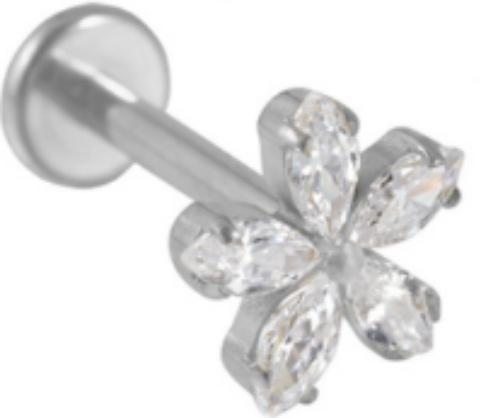
For the first change, choose something low and smooth. A plain ball, a small prong set stone or a flat shape. Save the large clusters and the dangles for a few months down the track, when the piercing has stopped being new. A recently healed lobe can still be provoked, and a big top catching on a jumper is how that happens.
What about hoops?
Hoops in lobes look wonderful and they are the thing most people want first. Wait a little longer than you think. A hoop moves constantly, catches on hair and clothing, and puts a rotating drag on the channel every time you turn your head. In a lobe that has been healed for a few months, that is fine. In one that healed a fortnight ago, it is how you end up back at the start.
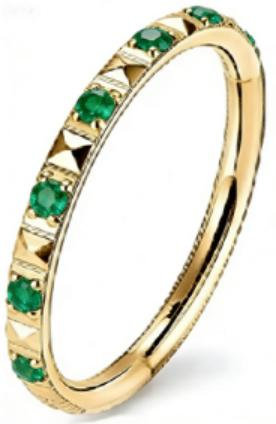
When you do go for it, a segment clicker is the nicest option. It is a single piece of titanium that hinges open and clicks shut, so there is no separate ball to lose and no join to catch. An 8mm or 10mm diameter suits most lobes.
A note on children’s ears
If you are buying for a child who has just been pierced, the metal question matters more, not less. A first piercing is one of the classic moments a lifelong nickel sensitivity gets created, and children have decades of earring wearing ahead of them. Implant grade titanium removes that risk entirely, and the flat back means there is no clasp to dig in at night or get lost.
It is also worth knowing that most piercing guns cannot be properly sterilised, because the plastic housing cannot go in an autoclave, and that gun studs are blunt and push tissue apart rather than cutting cleanly through it. A needle piercing from a professional studio heals faster and more comfortably. That is not a criticism of anyone who has already used a gun, it is just useful to know for next time.
Aftercare while it settles
Sterile saline twice a day, then leave it alone. That is the entire routine, and doing more than that is usually worse than doing less. No alcohol, no hydrogen peroxide, no tea tree oil, no antibacterial ointment, and no turning or twisting the jewellery, which is old advice that has been thoroughly discredited. Turning it tears the healing tissue every single time.
Wash your hands before touching your ear at all. Keep hair products, sunscreen and perfume off it. Wash your pillowcase more often than usual. The full aftercare guide goes through it properly.
Lobes are forgiving, which is exactly why they get treated carelessly. A little patience in the first two months buys you an ear you never have to think about again.
Frequently asked questions
Can I take them out overnight?
Not while healing. A new piercing channel can shrink surprisingly quickly, sometimes within hours, and getting the jewellery back in will hurt and can damage the tissue. Leave them in until fully healed.
What size should I order for a lobe?
18 gauge or 16 gauge depending on how you were pierced, in 6mm for most lobes or 8mm for thicker ones. If you are between sizes, 8mm is the safer guess, because a slightly long post is more comfortable than a slightly short one.
My lobe is sore weeks after piercing. What now?
Check three things first: whether the post is too short and pressing into a swollen lobe, whether you are sleeping on that side, and what metal is in there. Those three account for most cases. If it is hot, spreading, or you feel unwell, see a GP, because an infection is a different thing and needs treating.
Can I wear my old earrings again once healed?
If they are a metal you know is safe and you have never reacted to them, yes. If they are unlabelled costume earrings and your ears have ever been itchy, that is your answer.
How many lobe piercings can I have?
More than you would think, and stacking them is how most curated ears begin. My guide to ear piercing placements covers what sits where and how to plan them.
Before you buy
Whoever you buy from, look for a listing that names the metal standard (ASTM F-136 or ASTM F-67 titanium), states the gauge and length or diameter, and says plainly whether any gold colour is PVD or plating. If a seller cannot tell you, buy somewhere else. My guide to checking jewellery is genuinely nickel-free walks through what to look for, and the size guide covers the measurements.
Trusted sources
I only cite organisations that publish their own standards and research, so you can check anything here for yourself.
- Association of Professional Piercers: jewellery for initial piercings
- Association of Professional Piercers: aftercare guidelines
- DermNet: nickel allergy
Gemma
Leave a Reply