

Most piercing problems are made at night. Not by anything dramatic, just by eight hours of steady pressure from a pillow, repeated every night for months. It is the single most common cause of the bumps, soreness and slow healing that people blame on everything else, and it is almost entirely fixable by wearing the right jewellery to bed.
This guide is about which earrings you can genuinely sleep in, what makes a piece safe to sleep in, and what to do about the ear you always end up lying on. Written for Australian buyers, in Australian dollars.
The short answer
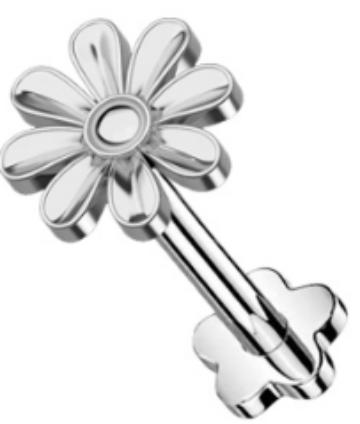
Sleep in a flat back labret stud in implant grade titanium, with a low profile top and the shortest post length that fits comfortably. That is the whole recipe. No butterfly backs, no hoops, no long dangly tops, and nothing with an open setting that hair can catch in. If you sleep in one thing for the rest of your life, make it a short, plain, flat back titanium stud.
Why butterfly backs are the problem
A butterfly back, sometimes called a scroll or friction back, is the little clasp that comes on almost every cheap earring sold in Australia. It has two curved wings that grip the post. It was designed to be cheap to make, and it is genuinely terrible to sleep in.
The wings stick out behind your ear. When you lie on that side, the pillow presses the whole earring inward and those wings dig into the back of your lobe. Over hours, that pressure creates a small indentation, sometimes a sore, and occasionally the back embeds itself into the tissue, which is as unpleasant as it sounds and is a genuinely common reason people end up at a GP. They also trap dead skin and product in the gap behind the clasp, and they fall off in bed constantly.
A flat back replaces all of that with a single smooth disc that sits flush against the skin. There is nothing to dig in, nothing to catch, nothing to fall off and nowhere for grime to collect. It is the reason piercers use them and the reason people who switch never go back.
What makes a piece safe to sleep in
1. A flat disc back
This is non negotiable and it is most of the benefit. The disc should be smooth, properly polished and reasonably wide, because a wider disc spreads pressure over more skin rather than concentrating it in one spot. Around 4mm is the size most piercers use for lobes and cartilage.
2. Implant grade titanium
Sleeping is the highest exposure situation there is. Your jewellery is in contact with your skin for a third of your life, often under pressure and often slightly damp. If a metal is going to cause a reaction, this is when it will happen. Implant grade titanium, specified as ASTM F-136, contains no nickel at all, which removes the question. My guide to nickel free earrings for sensitive ears covers why that matters.
3. The shortest post that fits
This is the detail almost everyone gets wrong. A post that is too long acts as a lever. Every time your ear presses into the pillow, that extra length rocks the piece and drags the disc across the skin behind your ear. A correctly sized post has just a little movement, no more.
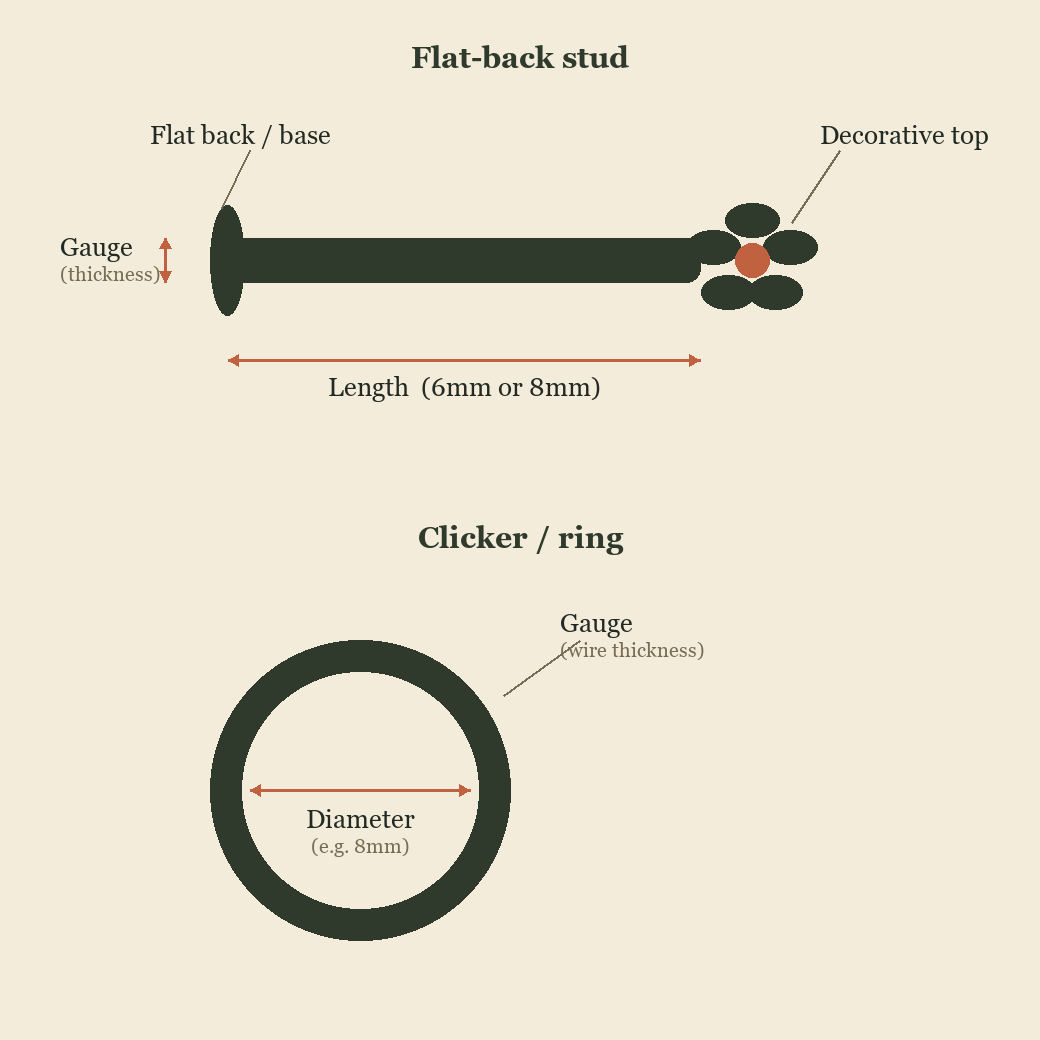
Fresh piercings are deliberately fitted with a long post, usually 8mm, to allow for swelling. That is correct and necessary at the start, and it is also why so many people have trouble sleeping in the first month. Once the swelling has gone down, usually after four to eight weeks, downsizing to 6mm is one of the most effective things you can do for a piercing that will not settle. The size guide shows what is being measured.
4. A low profile top
The top is what your pillow actually touches, so height matters. A flat or slightly domed top presses evenly. A tall prong setting, a spike, a dangle or a large cluster concentrates the pressure into a point, and that point is sitting directly over a healing channel.
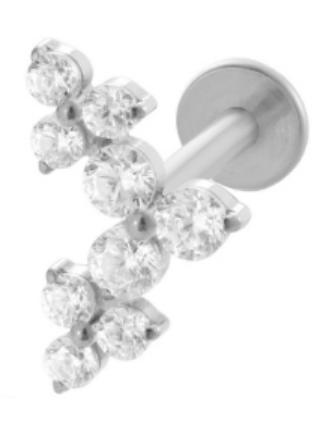
Prong set stones are fine if they sit low, which good ones do. What to avoid at night is anything that stands proud of the ear, and anything with gaps that hair can thread through, because hair wrapping around a setting and pulling is a genuinely common cause of overnight irritation.
5. Threadless, so it stays put
Internally threaded pieces screw together, and a screw thread can slowly work loose against a pillow over the course of a night. Threadless pieces use a bent pin held by tension inside the post, which does not unscrew. It also means no thread dragging through the piercing channel when you change it.
What to look for at night
The safest choices for sleeping are plain titanium flat back labrets and low set single stone labrets, in 6mm for a healed piercing or 8mm while still swelling. Plain tops are the safest thing you can wear to bed, and single stone pieces are barely taller.
If you want to sleep in gold, choose gold PVD over titanium rather than plated steel, so the metal touching your skin is still nickel free even where the finish has worn. If a piercing is still healing, though, I would wear plain titanium at night and save the gold for daytime.
What not to sleep in
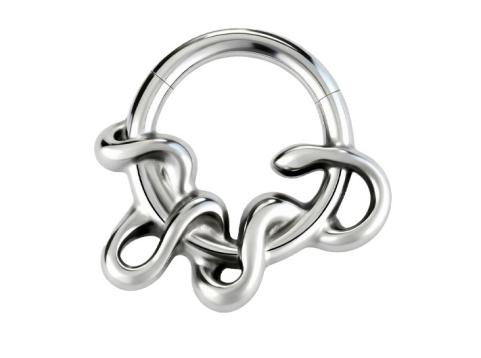
- Hoops and clickers. They rotate, they catch on pillowcases and hair, and they lever on the piercing all night. Beautiful in the day, a bad idea at three in the morning.
- Butterfly backs. For all the reasons above.
- Anything dangly. It will wrap around something.
- Screw back studs. They loosen, and the thread is rough on the channel.
- Anything you cannot identify the metal of. Eight hours of contact is not the time to find out.
- A long post you have never downsized. The most common fixable cause of a piercing that will not calm down.
The pillow trick
Jewellery solves most of it. The rest is about not lying directly on the piercing, and there is a very simple solution that piercers have recommended for years. Take a firm travel pillow, the U shaped kind, and sleep with your ear in the hole. Your head is supported, your ear touches nothing, and the piercing gets a full night without pressure. It looks slightly ridiculous and it works extremely well.
A cheaper version is a folded towel with a gap, or a doughnut cushion. Either way the principle is the same: support the head, suspend the ear. If you have had a helix or a conch pierced and it will not settle, this alone often fixes it within a fortnight.
It is also worth washing your pillowcase more often than usual while something is healing, and turning it over between washes. Hair product, sweat and skin oil all end up on that fabric, and then spend the night pressed against an open piercing.
If you have already got a bump
Do not take the jewellery out. Most bumps beside a healing piercing are irritation rather than infection, and they come from pressure, snagging or a post that is the wrong length. Removing the jewellery closes the channel over an inflamed area and makes everything harder.
Instead, work through the causes. Downsize the post if the swelling has gone. Switch to a low profile top. Stop sleeping on it, using the pillow trick above. Clean it with sterile saline twice a day and otherwise leave it completely alone, with no tea tree oil, no alcohol and no picking. Most irritation bumps settle within a few weeks once the cause is removed. The aftercare guide has the full routine, and if it is hot, spreading, or you feel unwell, see a GP, because that is a different problem.
The best earring to sleep in is one you cannot feel. Short post, flat back, low top, nickel free metal. That is the entire list.
Frequently asked questions
Can I sleep in hoops once I am healed?
You can, and plenty of people do. It is still the most likely way to catch or bend a piece, so if you love a particular clicker, it is worth swapping to a stud at night. A fully healed lobe is fairly forgiving. Healed cartilage is less so.
How long until I can sleep on a new piercing?
For a lobe, usually six to eight weeks. For cartilage, expect several months, and often closer to a year for a helix. Let comfort be the guide rather than the calendar. If it is tender when you press it, it is not ready.
Should I take my earrings out at night?
Not while a piercing is healing, because the channel can shrink surprisingly fast and getting the jewellery back in will hurt and can damage it. Once fully healed, it is a personal preference, though most people find a comfortable flat back stud is easier to leave in than to keep track of.
What length should I sleep in?
6mm suits most healed lobes and helixes. Stay at 8mm while there is still swelling, and downsize as soon as it has gone. If you are unsure, ask your piercer to check the fit, or read the size guide.
Before you buy
Whoever you buy from, look for a listing that names the metal standard (ASTM F-136 or ASTM F-67 titanium), states the gauge and length or diameter, and says plainly whether any gold colour is PVD or plating. If a seller cannot tell you, buy somewhere else. My guide to checking jewellery is genuinely nickel-free walks through what to look for, and the size guide covers the measurements.
Trusted sources
I only cite organisations that publish their own standards and research, so you can check anything here for yourself.
- Association of Professional Piercers: aftercare guidelines
- Association of Professional Piercers: jewellery for initial piercings
- DermNet: nickel allergy
Gemma
Leave a Reply