

If metal jewellery has ever left your skin red, itchy or sore, there is a good chance nickel was the culprit. Nickel allergy is one of the most common skin allergies in the world, and piercings are one of the most common ways people discover they have it. The frustrating part is that the jewellery market is full of vague and misleading claims, so knowing that a piece is genuinely free of nickel is harder than it should be. This guide explains what to look for, what to avoid, and how to shop with real confidence.
The short version is that words like hypoallergenic and nickel free are not tightly regulated, so they are not a guarantee on their own. What actually protects you is the material itself and being able to point to a recognised standard. Let us unpack that.
Why nickel causes so much trouble
Nickel is a metal that many people are sensitised to, meaning their immune system reacts to it on contact. In a piercing, that reaction can show up as itching, redness, a rash, weeping, or a piercing that simply refuses to settle no matter how careful your aftercare is. Because a piercing keeps the metal in constant contact with broken skin, it is a particularly easy way to trigger a reaction, and repeated exposure can make a sensitivity worse over time.
You can develop a nickel allergy at any point in life, even if cheaper jewellery never bothered you before. That is one reason it is worth choosing safe materials from the start rather than waiting for a problem.
The marketing traps to watch for
Hypoallergenic sounds reassuring but has no strict legal definition in jewellery. It suggests a lower chance of reaction, not a guarantee, and anyone can print it on a label.
Surgical steel is the big one. It sounds clinical and safe, and it is a perfectly good material for many uses, but most surgical stainless steel actually contains nickel. In a sealed healed piercing many people tolerate it, but it is not truly nickel free, and for sensitive skin or fresh piercings it can be a problem.
Gold plated pieces are only as safe as the metal underneath the plating. Thin plating over a cheap base metal such as brass will wear through, and once it does your skin meets whatever is beneath. The finish tells you nothing about the core.
What actually counts: implant grade materials
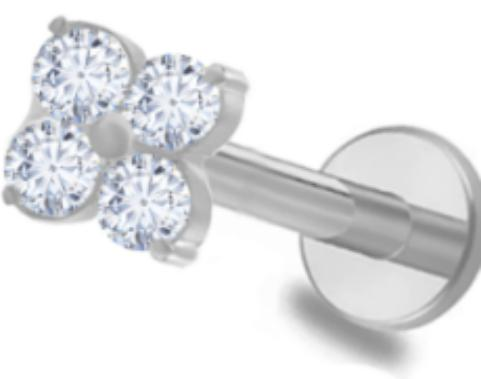
The gold standard, no pun intended, is implant grade material backed by a recognised specification. For titanium body jewellery, that specification is ASTM F-136. It refers to a titanium alloy that was developed to be placed inside the human body, in the way surgical implants are, which is about as demanding a test of biocompatibility as exists.
Implant grade ASTM F-136 titanium is the go-to precisely because it is nickel free and body safe. It is light, strong, holds a beautiful gold or silver finish, and is the kind of material a good piercer will want to put in a fresh piercing. If you would like the full comparison against steel and sterling silver, read my guide on what is actually safe for a piercing.
How to check before you buy
A trustworthy seller will tell you exactly what a piece is made of, not just what colour it is. Look for a clear statement of the material and, ideally, the standard it meets, such as implant grade ASTM F-136 titanium. Reputable suppliers can often provide mill certificates, which are documents from the metal supplier confirming the alloy. If a listing only says surgical steel, alloy, or simply does not say, treat that as a reason to ask questions or walk away.
Be especially careful with very cheap jewellery sold in large multipacks, as the low price often comes from unspecified base metals that are far more likely to contain nickel.
Home testing exists, if you want certainty
If you already own pieces you are unsure about, nickel spot test kits are available fairly cheaply. They use a swab and a solution that changes colour when nickel is present. They are not perfect and they will not tell you the grade of a metal, but they can flag an obvious nickel problem in something you already have. For anything going into a fresh piercing, though, it is far better to start with a material you can trust than to test your way out of a reaction.
What to ask, in one sentence
If you remember nothing else, remember this question to ask any seller: what exactly is this made from, and does it meet an implant grade standard? A confident, specific answer is a very good sign. A vague one tells you plenty too.
What an honest listing looks like
A trustworthy seller describes the material on every listing, names the standard, and answers questions about it directly. If you have reacted to jewellery in the past, ask before you order: how they answer tells you a lot. You can also plan a full safe collection with my curated ear guide.
Signs you might be reacting to nickel
A nickel reaction tends to look like itchy, red, sometimes flaky or weepy skin right around where the metal touches. With a piercing, the classic picture is a piercing that will not settle no matter how careful your aftercare is, often with an itchy redness that eases when the jewellery is out and returns when it goes back in. This is different from a straightforward infection, which is usually more painful, hot and accompanied by thick discharge. If a piercing has been grumpy for weeks and your aftercare is spot on, the metal is worth suspecting.
Other genuinely safe materials
Implant grade titanium is the usual first choice, but it is not the only safe option worth knowing about. Niobium is another body friendly metal that many sensitive people tolerate well. Solid high karat gold can be a lovely choice for healed piercings, with some caveats I cover below. Certain inert glass is used in some jewellery too. The common thread is that safe materials are specific and named, whereas risky ones hide behind vague words. If a seller can tell you exactly what a piece is and point to a standard, that is a good sign.
What about solid gold
Solid gold is not automatically nickel free, because pure gold is too soft to use on its own and is always mixed with other metals to make an alloy. What matters is which metals, and the karat. Lower karat golds contain more of those other metals, and some white gold alloys in particular have historically used nickel. Reputable body jewellery made in higher karat, nickel free gold alloy can be beautiful and safe for healed piercings, but the label solid gold on its own does not guarantee anything. As always, ask what the alloy is.
Nickel is more common than you think
Part of why nickel allergy is so widespread is that we are exposed to it constantly, in cheap earrings, belt buckles, jean buttons, watch cases, coins and phone bodies. Every exposure can nudge a sensitive immune system further along, which is how someone who wore cheap jewellery happily for years can suddenly start reacting. Choosing genuinely nickel free materials for the jewellery that sits in your skin around the clock is one of the kindest things you can do for your body, especially if you already know you are sensitive.
Fresh piercings are the strictest test
A useful way to think about all of this is that a healed, sealed piercing is far more forgiving than a fresh one. Once skin has fully closed around a piercing, many people can wear materials that would irritate an open wound, which is why someone might tolerate a pair of cheaper earrings in long healed lobes yet react badly to the same metal in a fresh piercing. The moment that matters most, then, is the beginning. Healing with a genuinely nickel free implant grade material gives the piercing the calm start it needs, and it means you are not gambling your healing on a vague label.
A simple rule for shopping online
When you cannot hold a piece or ask a shop assistant, one rule keeps you safe. If a listing does not clearly state the material and, ideally, an implant grade standard, treat it as unsuitable for a fresh or sensitive piercing until proven otherwise. Good sellers are proud of their materials and say so plainly. Silence or vagueness is information in itself. It costs nothing to message a seller and ask the direct question, and how they answer tells you whether to trust them with your skin.
None of this is about being anxious every time you buy a piece of jewellery. It is simply about knowing the right question and recognising a straight answer. Once you get into the habit of choosing implant grade materials, shopping becomes calmer, not more stressful, because you can enjoy the pretty part knowing the safe part is already handled.
Trusted sources
For deeper reading, DermNet explains nickel allergy and contact dermatitis in detail, and the Association of Professional Piercers lists the implant grade materials, including ASTM F-136 titanium, that are safe for piercings.
Gemma
Leave a Reply