
A helix piercing is one of the easiest piercings to fall in love with and one of the easiest to get wrong. It sits in the upper curve of the ear, through cartilage rather than soft lobe tissue, and cartilage is fussy. It heals slowly, it holds a grudge, and it reacts to things a lobe would shrug off. The jewellery you put in it in those first months matters more than almost anything else you do.
This guide is about what to actually buy for a fresh helix, and why. Not the prettiest piece in the shop, but the piece that gives your ear the best chance of healing cleanly so that you can wear the pretty one later. I have written it for Australian buyers, with Australian shipping and Australian prices in mind, because a lot of the advice online assumes you can walk into a studio in Los Angeles.
The short answer
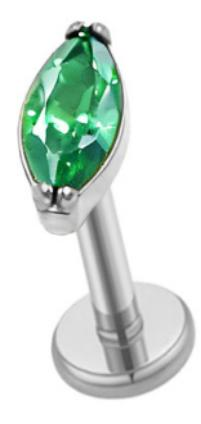
If you want the summary before the detail, here it is. For a fresh or recently pierced helix, buy an implant grade titanium flat back labret, 16 gauge, in a length of 8mm for the initial healing period, with a modest flat top rather than a large or dangly one. Avoid rings, avoid surgical steel, avoid anything gold plated in the first few months, and avoid anything with a butterfly back.
Everything below explains why each of those choices matters, and what to do once the piercing has settled. If you are already healed and just shopping for something beautiful, skip ahead to the section on what to wear once you are healed.
Why cartilage is different to a lobe
A lobe is soft, fleshy tissue with a generous blood supply. That blood supply is what does the healing, and it is why lobes usually settle within six to eight weeks. Cartilage has almost no direct blood supply of its own. It is fed by the thin layer of tissue that surrounds it, which means everything happens more slowly. A helix commonly takes six to twelve months to fully heal, and some take longer.
The practical consequence is that a helix stays vulnerable for a long time. Every knock, snag and pressure point during those months has the potential to irritate it, and irritated cartilage responds by swelling, weeping or forming a bump. Your jewellery is the one variable you control every hour of every day, so it is worth getting right.
What to look for, and why
1. Implant grade titanium, not surgical steel
This is the single most important choice. Implant grade titanium, properly specified as ASTM F-136, is titanium alloyed with aluminium and vanadium and refined to the standard used for surgical implants. It contains no nickel. Surgical steel, by contrast, always contains nickel, usually somewhere between eight and twelve percent, and while good quality steel holds most of that nickel locked in the alloy, a healing piercing is exactly the situation where a little leaching matters.
Nickel allergy is common, it affects women more often than men, and it can develop over time rather than being something you are born with. A fresh piercing is an open wound sitting in constant contact with metal, which is one of the classic ways people become sensitised in the first place. Choosing titanium removes the question entirely. If you want the longer comparison, I have written a full breakdown of titanium versus surgical steel versus sterling silver.
A word on what to look for when you buy. The phrase you want on the listing is implant grade titanium or ASTM F-136, ideally both. Terms like surgical grade, hypoallergenic and titanium coated are not the same thing and are not regulated. If a seller cannot tell you which standard their metal meets, treat that as your answer.
2. A flat back labret, not a ring
Rings look wonderful in a healed helix and they are a genuinely bad idea in a fresh one. A ring moves. It rotates with every turn of your head, it swings when you walk, and every bit of that movement drags across the healing channel inside your ear. It also sits away from the ear, which makes it far easier to catch on a jumper, a towel, a hairbrush or a pillow.
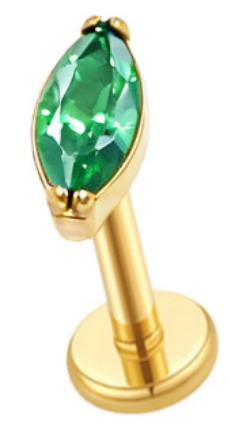
A flat back labret is the opposite. A straight post goes through the piercing, a flat disc sits flush behind the ear, and a decorative top sits on the front. There is nothing to swing, nothing curving behind the ear and nothing sticking out to catch. The flat disc is smooth against the skin, so there is no clasp to press in when you sleep. If you want the detail on how they work, my guide to flat back labrets covers it properly.
3. Threadless, so nothing loosens
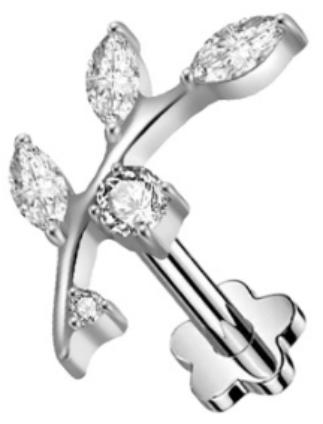
Flat back labrets come in two mechanisms. Internally threaded pieces screw together. Threadless pieces, sometimes called push pin, use a slightly bent pin on the top that grips inside a hollow post by tension. Threadless is the gentler of the two for a healing piercing, because there is no thread to catch on the inside of the channel as it passes through, and nothing that can gradually unscrew itself while you sleep.
Threadless also makes changing your top far easier once you are healed, which matters more than you might think. If changing a piece is fiddly and stressful, you will handle your ear more, and handling is the enemy. It is the main reason to choose threadless.
4. The right gauge and the right length
Gauge is the thickness of the post, and it runs backwards, so a smaller number means a thicker bar. For a helix, 16 gauge, which is 1.2mm, is the standard in Australia and the thickness most piercers use. Some studios pierce cartilage at 18 gauge, which is 1.0mm. If you are buying a replacement, match what you were pierced with rather than guessing, because putting a thinner post into a channel made for a thicker one lets the piercing shrink, and forcing a thicker post into a thinner channel is a genuinely bad experience.
Length matters just as much and is the thing people most often get wrong. A fresh piercing swells, so it is pierced with a deliberately long post, usually 8mm, to leave room. Once the swelling has gone down, that extra length becomes a liability, because a long post moves around and levers on the piercing every time it is knocked. Most healed helixes are comfortable at 6mm. The size guide walks through measuring properly.
5. A top that does not fight you
For the healing months, choose a top that is flat, smooth and not much wider than the post. A small prong set stone, a plain ball or a low profile shape are all excellent. What you want to avoid is anything large, anything with dangling parts, and anything with an intricate open setting that hair can thread itself through. There will be plenty of time for the dramatic piece later, and it will look better in an ear that healed cleanly.
What to actually put in a fresh helix
For a healing helix, the pieces to reach for are plain titanium flat back labrets or small single stone labrets, in 16 gauge, 8mm to start and 6mm once the swelling settles. Unplated, low profile and completely nickel free is exactly the boring, reliable combination cartilage wants.
Hold off on gold for the first few months. Gold PVD over titanium is a hard, durable finish and a genuinely good one, but any finish is a surface layer, and the safest thing for an open wound is bare implant grade metal with nothing on it at all. Once the piercing is settled, gold is completely fine.
What to wear once you are healed
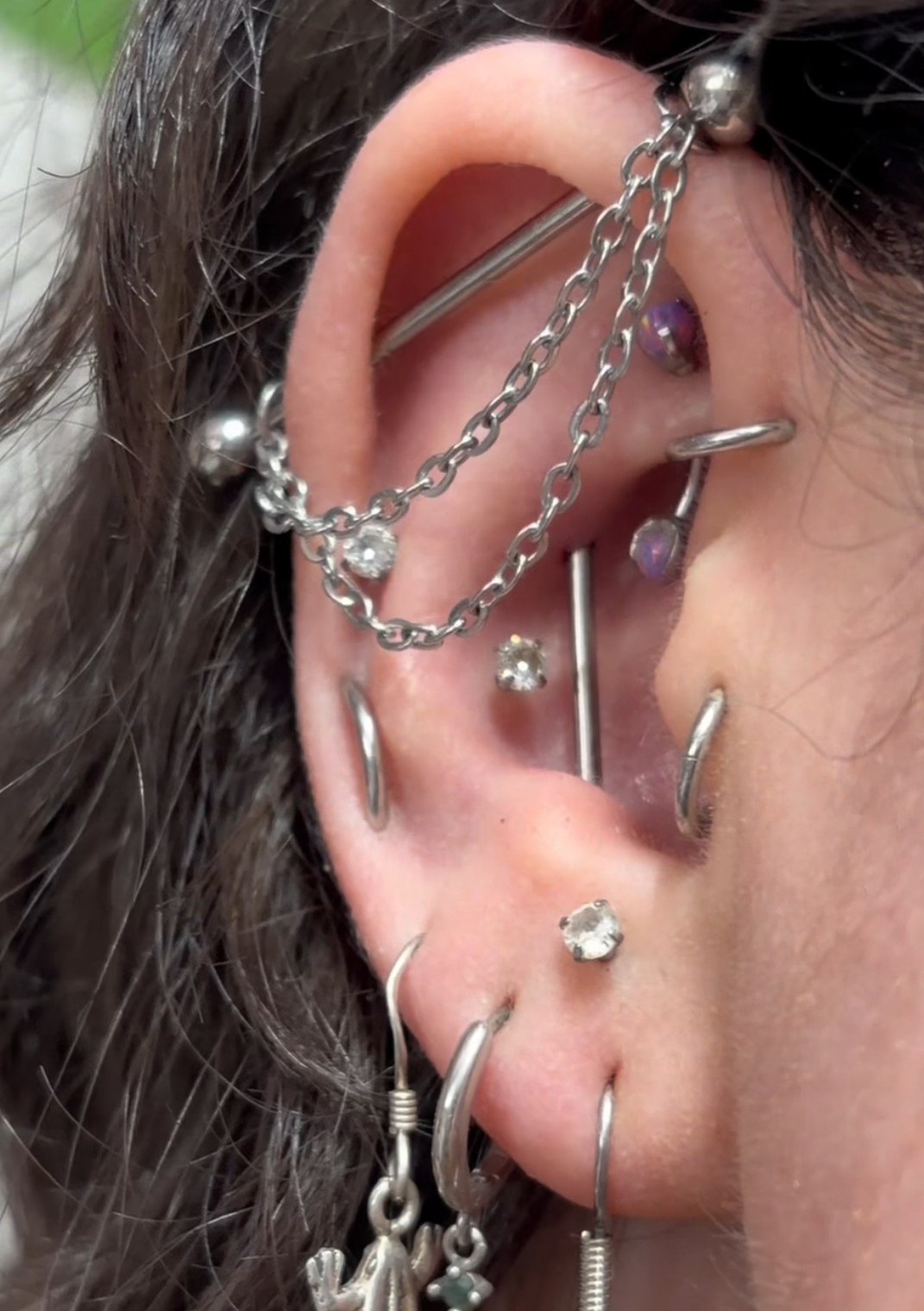
This is the fun part, and it is worth waiting for. A healed helix opens up everything. Segment clickers and hoops finally become an option, and a hoop through a healed helix is one of the best looking piercings there is. Larger and more decorative tops become safe, gold becomes safe, and you can start thinking about how the helix sits alongside your other piercings rather than just protecting it.
How do you know you are healed? Not by the calendar. A healed piercing is one that has been completely calm for months, with no crusting, no tenderness when you touch it, no swelling and no reaction when you sleep on it. If it still flares up occasionally, it is still healing, whatever month it is. If you are planning how the helix will work with the rest of your ear, my guide to ear piercing placements is a good place to start.
The most common mistakes
- Buying a ring too early. The most common cause of an unhappy helix. Wait until it is fully settled.
- Trusting the word hypoallergenic. It is a marketing word with no legal definition in Australia. Ask for the standard instead.
- Leaving the long post in. The extra length is for swelling. Once the swelling has gone, downsize.
- Sleeping on it. Pressure for eight hours a night is the single biggest cause of helix bumps. A travel pillow with the hole under your ear works beautifully.
- Twisting the jewellery. Old advice, and it was always wrong. Turning the jewellery tears the healing tissue every single time.
- Changing it too soon. Every early change resets some of the progress. If you must change it, have your piercer do it.
Aftercare, briefly
Good jewellery does most of the work, but not all of it. Clean the piercing twice a day with sterile saline, let it dry, and otherwise leave it alone. No alcohol, no tea tree oil, no hydrogen peroxide, no antibacterial ointments. Do not turn it, do not pick at the crusting, and wash your hands before you touch it at all. The full aftercare guide goes through it step by step.
If a bump appears, do not panic and do not take the jewellery out. Most helix bumps are irritation, not infection, and they come from pressure, snagging or a piece that is the wrong size. Fix the cause and the bump usually settles on its own.
Buying in Australia
A practical note on shopping locally. Ordering piercing jewellery from overseas marketplaces is cheap and it is a gamble, because you have no way of verifying what the metal actually is, and the listings that say titanium most loudly are often the ones least able to prove it. Buying from an Australian seller also means your piece arrives in days rather than weeks, which matters when you have a downsize appointment coming up.
Whoever you buy from, ask for the material standard and, ideally, a certificate. A seller of genuine implant grade titanium will be happy to show you.
The best jewellery for a fresh helix is the piece you stop thinking about. Smooth, light, correctly sized, and completely uninteresting to your ear.
Frequently asked questions
Can I put a hoop in a new helix?
You can, and I would strongly suggest you do not. A hoop moves constantly and catches easily, and in cartilage that movement is what turns a healthy piercing into an irritated one. Give it six to twelve months of calm, then enjoy the hoop.
Is titanium worth the extra cost over steel?
Yes, and the gap is smaller than people expect. The difference between a titanium piece and a steel one is a few dollars, and the difference in outcome can be a piercing that heals versus one that fights you for a year. It is the cheapest insurance in the whole process.
What size should I order?
16 gauge is standard for a helix in Australia. Order 8mm if you are still in the first few weeks and swelling, and 6mm once things have settled. If you are unsure, the size guide shows you exactly what is being measured.
How do I know my jewellery is genuinely nickel free?
Look for ASTM F-136 named explicitly, and ask the seller whether they hold a composition test report on the metal itself rather than just a surface release test. The two are different things, and the composition report is the meaningful one.
Before you buy
Whoever you buy from, look for a listing that names the metal standard (ASTM F-136 or ASTM F-67 titanium), states the gauge and length or diameter, and says plainly whether any gold colour is PVD or plating. If a seller cannot tell you, buy somewhere else. My guide to checking jewellery is genuinely nickel-free walks through what to look for, and the size guide covers the measurements.
Trusted sources
I only cite organisations that publish their own standards and research, so you can check anything here for yourself.
- Association of Professional Piercers: jewellery for initial piercings
- Association of Professional Piercers: aftercare guidelines
- DermNet: nickel allergy
Gemma
Leave a Reply