

When you start shopping for piercing jewellery you quickly meet three words that describe how a piece is held together: threadless, internally threaded and externally threaded. It sounds like small print, but the fitting genuinely affects how comfortable your jewellery is, how easy it is to change, and how kind it is to a healing piercing. This guide explains the difference in plain language and explains why threadless is the usual pick for healing piercings.
The fitting is simply the mechanism that keeps the decorative top attached to the bar that sits in your piercing. Get it right and changing your jewellery becomes quick and painless. Get it wrong and it can be fiddly at best and irritating at worst.
The three fittings, quickly
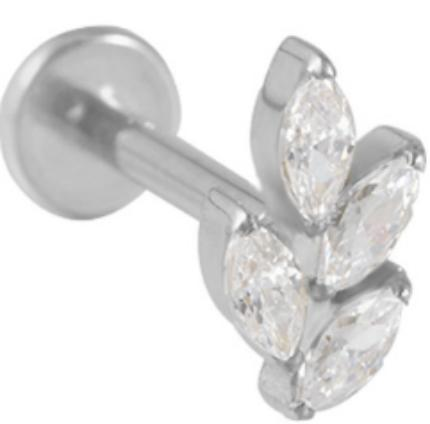
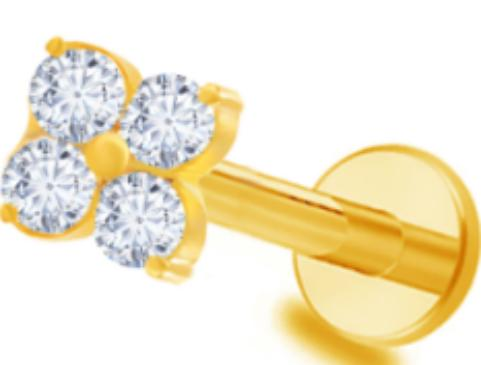
Threadless, also called push in. The top has a small flexible pin that pushes into a hollow bar and holds by tension. There is no screw thread at all. To secure it you give the pin a tiny bend, push it in, and it stays put.
Internally threaded. The bar has a threaded hole, and the top has a matching screw that turns into it. The important detail is that the thread is on the top, so the part that passes through your piercing is smooth.
Externally threaded. The screw thread is on the bar itself, which means the threaded section has to pass through your piercing every time you put it in. This is the least comfortable option, especially for fresh or sensitive piercings.
How threadless actually works
Threadless jewellery holds together by tension rather than a screw. The pin on the top is bent very slightly, then slotted into the hollow end of the bar. That gentle springiness is what keeps it in place. To remove it you simply pull the top straight out. Once you have done it once or twice it becomes second nature, and there is no tiny thread to line up or cross.
Why the smooth bar matters for healing
Here is the heart of it. With externally threaded jewellery, the screw thread runs along the bar, so every time you insert the piece those tiny ridges drag through your piercing. In a healed piercing that is merely annoying, but in a fresh or sensitive one it can scratch the delicate channel and set back your healing. Both threadless and internally threaded designs keep the bar smooth where it passes through you, which is far gentler. Threadless takes it one step further by removing the screw entirely.
The everyday advantages of threadless
Easy changes. Swapping a top takes seconds, with no fiddly screwing in a mirror. This makes restyling your ear genuinely enjoyable rather than a chore.
Mix and match. Because tops and bars are separate, you can build a collection of decorative tops and move them between bars, getting far more looks from fewer pieces.
Comfort. A smooth bar and a low profile fit sit nicely against the skin, whether it is a flat back labret in the lobe or a stud on the flat.
Kinder to piercings. No thread dragging through the piercing on insertion means less irritation, which your healing skin will thank you for.
Is there a learning curve?
A little, and it is worth naming so it does not surprise you. The first time you handle a threadless top, the idea of bending the pin can feel strange. The trick is that you only need the smallest bend, just enough to create tension, and you push it into the bar with gentle, even pressure. To remove it you hold the bar steady and pull the top straight out. After a couple of goes it feels completely natural, and most people quickly prefer it to lining up a screw thread.
Does threaded still have a place?
Internally threaded jewellery is still a solid, secure choice and some people prefer the reassurance of a screw for certain placements or very active lifestyles. It is a perfectly good option. Externally threaded jewellery is the one I would steer you away from for anything going through your skin, simply because of that thread dragging through the piercing. If you only remember one rule, avoid externally threaded for fresh piercings.
Why threadless is the usual pick
Threadless brings together the things that matter most: comfort, easy restyling, and a design that is genuinely kind to healing piercings. Paired with nickel free implant grade ASTM F-136 titanium, it means your jewellery is safe to wear and a pleasure to change. To plan a look built around interchangeable tops, see my guide on building a curated ear, and if you are choosing sizes, the size guide covers gauge and length.
How to insert a threadless top, step by step
Start with clean hands and a clean piece, ideally over a soft surface so nothing bounces away if you drop it. Hold the decorative top and look at the little pin sticking out of the back. Give that pin the tiniest bend, just a few degrees, which is what creates the tension that holds everything together. Line the pin up with the hollow opening of the bar that is in your piercing, then push it gently and evenly straight in. You should feel it seat. Give the top a very light wiggle to confirm it is secure, and you are done.
How to remove it
Removal is even simpler. Hold the bar steady from behind with one hand so the whole piece does not turn in your piercing, and with the other hand pull the top straight out. Do not twist or unscrew it, because there is no thread to unscrew, and twisting can be uncomfortable. Straight out is all it takes.
If it feels loose or keeps falling out
If a top will not stay put, the pin has usually lost a little of its tension and just needs a touch more bend. Take the top out, add a very small amount of extra bend to the pin, and reinsert. Go gently and in tiny increments, because a little goes a long way and you can always add more.
If it feels too tight or hard to insert
The opposite problem means the pin is bent a little too much. Ease it back toward straight, just slightly, and try again. The aim is the smallest bend that holds securely, which keeps insertion smooth and protects the pin over time.
Looking after the pin
The pin is the one part that appreciates a gentle touch. Avoid bending it back and forth repeatedly for no reason, as any metal will tire if it is flexed too often. Handle your tops calmly, store them somewhere they will not get crushed, and they will keep their spring for a long time. Threadless jewellery is designed to be changed often, so this is about care, not fragility.
Lovely for lobes, noses and beyond
Threadless really shines for flat back labret styles in the lobe and on the flat, where the smooth flat disc sits comfortably against the skin, and for nostril piercings, where a low profile push in is both secure and easy to live with. Once you are used to the push in action, most people find they never want to go back to lining up a screw thread in a mirror again.
The three fittings at a glance
If you want the whole thing in a nutshell, here it is. Threadless, or push in, holds by tension with no screw, gives the smoothest bar and the easiest changes, and is the best pick for comfort and for healing piercings. Internally threaded has the screw on the top so the bar that passes through you stays smooth, which makes it a secure and perfectly good option that some people prefer. Externally threaded has the screw on the bar, so the thread drags through the piercing on every insertion, and it is the one to avoid for anything going through your skin, particularly while it is healing. Remember those three and you can shop any jewellery site with confidence.
Security for an active life
A question that comes up often is whether threadless jewellery stays put during sport, sleep and everyday knocks. The honest answer is that when the pin tension is set correctly it is very secure, and most people wear it through all of normal life without a second thought. If you are especially active, it is worth a quick habit of pressing gently on your tops now and then to check they are seated, just as you might check a stud earring. And if you ever want maximum reassurance for a particular placement, an internally threaded piece is always there as an alternative, with the same smooth bar through the piercing.
The best endorsement of threadless is that once people get used to it, changing jewellery stops feeling like a task and starts feeling like play. Being able to restyle an ear in a few minutes, with no thread to fight, is exactly the kind of small pleasure that makes a collection worth building. Give it a couple of goes and I think you will be won over too.
Trusted sources
The Association of Professional Piercers covers safe jewellery styles and fittings for fresh piercings, and their aftercare guidance is worth a read while your piercing heals.
Gemma
Leave a Reply