

The conch is one of the best looking piercings on the ear and one of the slowest to heal. It sits in the wide bowl of cartilage in the middle of the ear, named after the shell it resembles, and it can be done as an inner conch, near the ear canal, or an outer conch, further out towards the rim. Both are striking. Both take patience.
The jewellery you put in a conch matters more than in almost any other placement, because the piercing passes through a thick section of cartilage and sits somewhere your pillow, your headphones and your hairbrush all reach. This guide covers what to buy, when, and what to avoid. Written for Australian buyers in Australian dollars.
The short answer
For a fresh conch, buy an implant grade titanium flat back labret, 16 gauge, 8mm to start and 6mm once the swelling settles, with a low profile top. For a healed conch, a clicker ring is the classic look and this is the placement it suits best of all. Do not start with a ring, and do not use surgical steel.
Why the conch is demanding
Cartilage has no meaningful blood supply of its own. It is fed by the thin membrane wrapped around it, which is why cartilage piercings heal so much more slowly than lobes. A conch passes through one of the thickest parts of that cartilage, so there is more tissue to heal and a longer channel to keep clean. Expect six to twelve months, and do not be surprised if it takes longer.
The conch also sits in an awkward spot. It is right where your ear meets the pillow, right where over-ear headphones press, and right in the path of a hairbrush. Every one of those is a chance to knock or drag on a healing piercing, and cartilage responds to being knocked by swelling and forming bumps.
What to wear while it heals
A flat back labret, not a ring
This is the part people most want to argue with, because a conch ring is genuinely beautiful and it is what most people are picturing when they book the appointment. Wait for it. A ring in a fresh conch rotates with every movement, drags the healing channel against itself, and sits proud of the ear where it catches on everything. A flat back labret sits flush, does not move, and gives the cartilage a still environment to heal in.
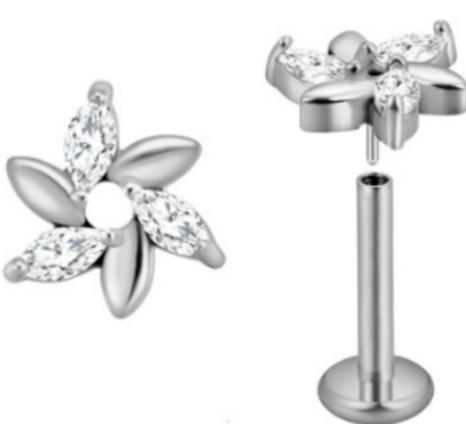
The flat disc goes behind the ear against the back of the conch bowl, and the decorative top sits in the bowl itself. Smooth, low and quiet. My guide to flat back labrets explains how they work in more detail.
Implant grade titanium
A conch is an open wound for the better part of a year, which is the longest and most sustained metal contact of any common piercing. That makes the metal question more important here, not less. Implant grade titanium, specified as ASTM F-136, contains no nickel at all, so there is nothing to leach and nothing to react to over those months.
Surgical steel contains eight to twelve percent nickel, and a year of contact with a healing channel is exactly the circumstance in which people develop a permanent nickel sensitivity. I have written a full comparison of which one to actually buy if you want the detail.
The right length, and downsizing
Because the conch passes through thick cartilage and swells considerably, you will be pierced with a long post, usually 8mm and sometimes 10mm. That length is correct at the start. It becomes a problem once the swelling goes down, because a post that is too long levers on the piercing every time your ear is touched, and that levering is the single most common cause of a conch bump.
Downsizing to 6mm after the initial swelling settles, usually somewhere between six and twelve weeks, is the most valuable thing you can do for a conch. Many piercers include one downsize in the price. The size guide shows exactly what is being measured.
What to wear once it is healed
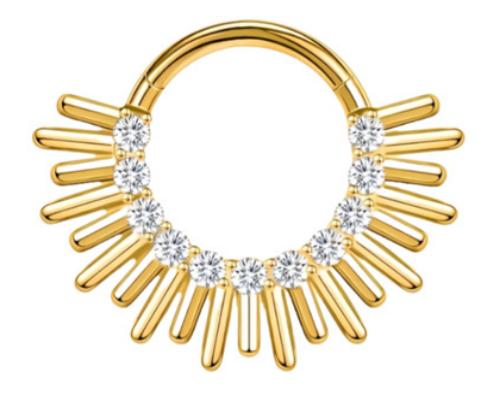
This is what you waited for. A healed conch takes a clicker ring better than any other placement on the ear, because the ring sits in the bowl and frames the whole middle of the ear. A larger diameter, usually 10mm or 12mm, suits an inner conch, while a smaller ring works for an outer conch closer to the rim.
A segment clicker is the nicest mechanism for this. It is a single piece of titanium that hinges open and clicks shut, with no separate ball to lose and no join to catch on your hair. Look for one in implant grade titanium, in the diameter your piercer recommends.
You can also keep wearing a stud, and plenty of people do. A healed conch will take a larger and more decorative top than it could while healing, so this is the point to enjoy a bigger stone or a shaped design.
Conch piercings and headphones
Worth its own section, because it catches people out. Over-ear headphones press directly on the conch, and a few hours of that on a healing piercing is enough to cause swelling and a bump. If you wear headphones for work, gaming or study, this is a genuine consideration before you book.
Options, in order of how well they work: switch to in-ear buds while healing, which avoids the area entirely. Use open-backed headphones with softer pads. Or take a break every hour so the pressure is not continuous. If a bump has already appeared and you wear headphones daily, that is the first thing to change.
Mistakes that cost people months
- Starting with a ring. The most common conch mistake by a wide margin.
- Never downsizing. The long post is temporary. Leaving it in causes the bump people then blame on the piercing itself.
- Sleeping on it. A conch is directly in the pillow’s path. See my guide to what to sleep in.
- Headphones. Hours of daily pressure on healing cartilage.
- Changing it early. A conch feels healed long before it is. Wait for months of complete calm.
- Cheap metal. A year of contact is not the place to save fifteen dollars.
Frequently asked questions
How long does a conch take to heal?
Six to twelve months is typical, and longer is common. It will feel fine long before it is actually healed, which is why so many people change the jewellery too early and set themselves back.
Inner or outer conch?
Inner sits in the bowl near the ear canal and takes a larger ring beautifully. Outer sits closer to the rim and suits a stud or a smaller ring. Your ear anatomy decides which works, so a piercer will tell you in a moment. My guide to ear piercing placements covers how the two sit alongside other piercings.
What gauge is a conch?
16 gauge, which is 1.2mm, is standard in Australia. Some piercers use 14 gauge for a conch because the thicker bar suits the heavier tissue. Match what you were pierced with.
When can I put a ring in?
Once the piercing has been completely calm for several months: no tenderness, no crusting, no swelling and no reaction to being slept on. That is usually somewhere past the nine month mark, and there is no prize for rushing it.
What conch jewellery costs in Australia
Prices vary more than they should, so it helps to know what you are looking at. A titanium flat back labret from a seller who can name their standard sits somewhere around A$28 to A$45 depending on the top. A titanium clicker ring runs roughly A$40 to A$60, because it is a more complex piece to make, with a hinge and a seamless closure machined into a single ring.
Below that, at ten or fifteen dollars, you are almost certainly looking at steel or an unspecified alloy, whatever the listing says. Above it, at eighty dollars and up, you are usually paying for solid gold, a named designer, or a studio’s retail markup, all of which are legitimate reasons but none of which make the titanium underneath any safer.
The practical advice is to buy two pieces rather than one. A conch needs a long post at first and a short one after downsizing, and having the 6mm already sitting in your drawer removes the temptation to leave the long one in for another few months.
Styling a conch
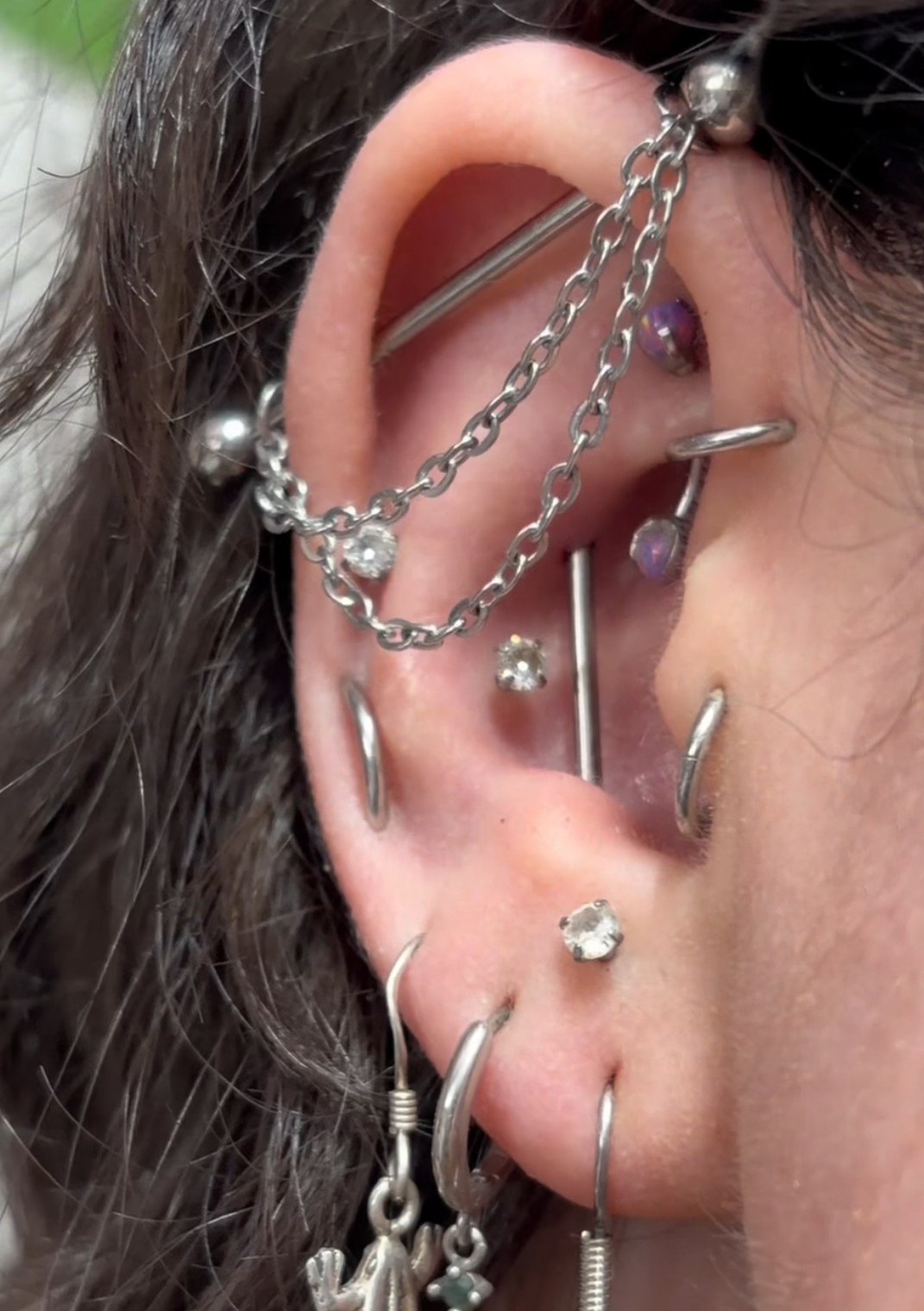
A conch is an anchor piercing. It sits in the middle of the ear, it is larger than the piercings around it, and it draws the eye, which means it sets the tone for everything else you wear. If you are planning a curated ear, the conch is usually the piece to choose first and build around.
A conch ring frames the whole inner ear and reads as the statement piece, so the lobes and helix around it can stay small and simple without the ear looking bare. A conch stud does the opposite: it leaves room for a busier helix or a stacked lobe. Neither is more correct, but picking one keeps the ear from looking crowded. My guide to building a curated ear goes through how to balance placements, and mixing gold and silver covers using two tones without it looking accidental.
Before you buy
Whoever you buy from, look for a listing that names the metal standard (ASTM F-136 or ASTM F-67 titanium), states the gauge and length or diameter, and says plainly whether any gold colour is PVD or plating. If a seller cannot tell you, buy somewhere else. My guide to checking jewellery is genuinely nickel-free walks through what to look for, and the size guide covers the measurements.
Trusted sources
I only cite organisations that publish their own standards and research, so you can check anything here for yourself.
- Association of Professional Piercers: jewellery for initial piercings
- Association of Professional Piercers: aftercare guidelines
- DermNet: nickel allergy
Gemma
Leave a Reply