

Getting your first piercing is exciting, and it is completely normal to feel a little nervous about the part that comes afterward. Most of the worry people carry is simply not knowing what is normal. This guide takes you through the whole journey, from choosing where to go, to what the first few weeks feel like, to knowing the difference between healthy healing and a sign that something needs attention. Read it once and you will feel far more prepared.
Everyone heals at their own pace, and this is general guidance rather than medical advice, so always follow the aftercare your own piercer gives you and see a professional if you are worried. With that said, here is what to expect.
Start by choosing a good piercer
Where you get pierced matters more than almost anything else. Look for a clean, professional studio that uses a single use sterile needle rather than a piercing gun. Guns cannot be properly sterilised and they use blunt force rather than a clean cut, which is harder on the tissue. A good piercer will talk to you about placement, check your anatomy, and use implant grade jewellery from the start.
It is worth travelling a little further or paying a little more for someone reputable. A well done piercing with good initial jewellery heals more smoothly and saves you trouble down the track.
What happens on the day
Your piercer will clean the area, mark the spot and check you are happy with the placement before anything else. The piercing itself is quick. Most people find the actual moment is over faster than they expected, with a short sharp sensation and then it is done. You may feel warm or a little lightheaded afterward, which is a normal response, so take your time before you stand up.
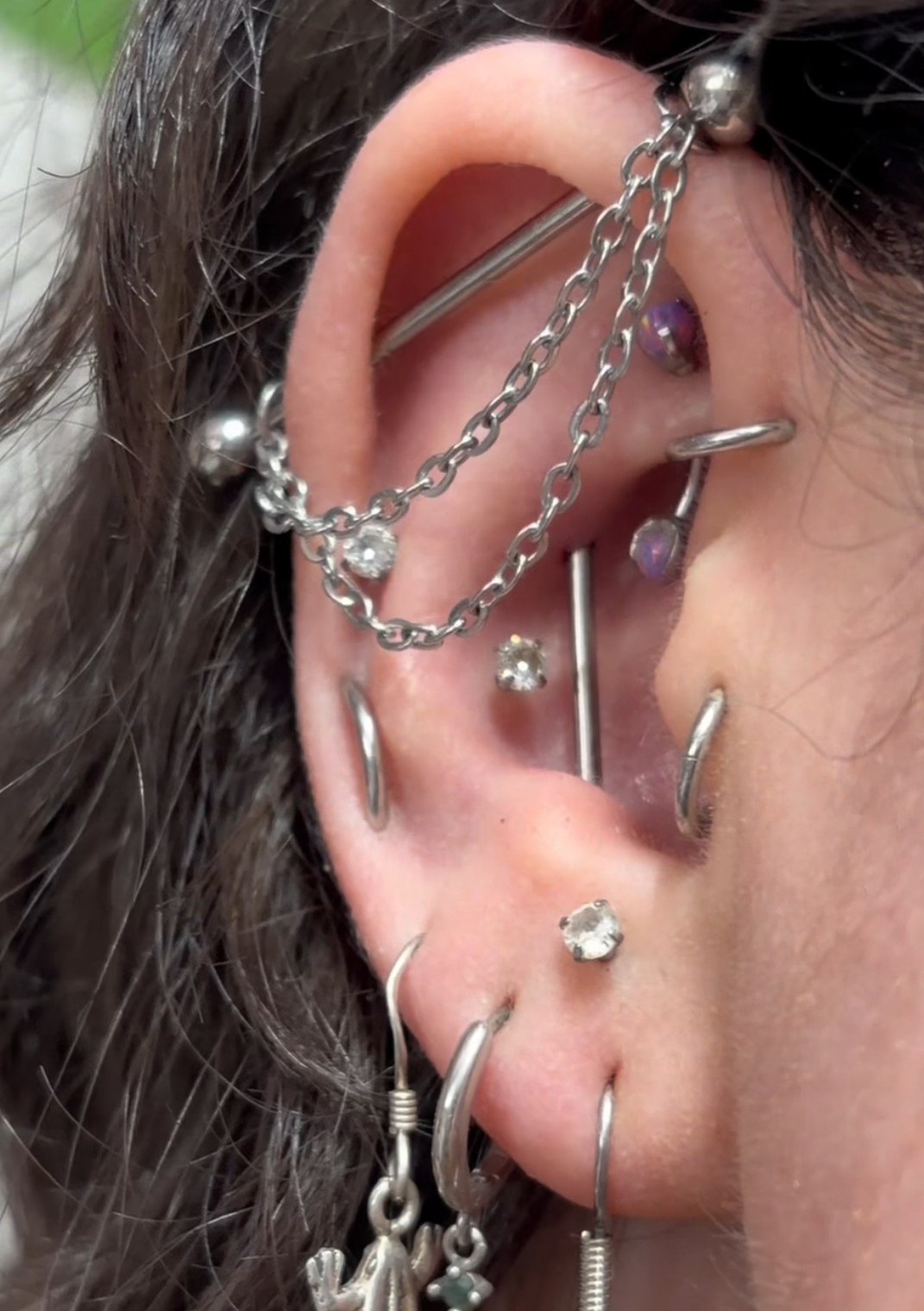
Your first jewellery: why the metal matters
The jewellery you heal with is not the place to cut corners. A fresh piercing is an open wound, and it will be in close contact with that metal around the clock for months. This is why implant grade materials matter so much. Implant grade ASTM F-136 titanium is nickel free and designed to sit safely in the body, so it gives a new piercing the best possible chance to settle. If you want to understand why some metals cause reactions and others do not, my guide on safe metals goes deeper.
Your piercer will usually fit a slightly longer bar at first to allow for swelling. Once things calm down you can have it downsized to a neater length.
The first few weeks, and what is normal
In the early days it is completely normal to see some redness around the piercing, a little swelling, some tenderness, and a light crust of dried fluid on the jewellery. That crust is just part of healing. What you are hoping to avoid is heat, a lot of swelling that gets worse rather than better, thick coloured discharge, or pain that increases over time instead of easing.
A useful rule of thumb is direction of travel. Fresh piercings should trend toward feeling better week by week. A brief flare after a knock or a rough night of sleep is normal, but a steady worsening is worth a conversation with your piercer.
Your aftercare routine
Aftercare is refreshingly simple, and simpler is genuinely better. The core of it is gently cleaning the piercing with a sterile saline solution once or twice a day, and otherwise leaving it alone. The aftercare guide sets out the full routine step by step, but the short version is clean hands, saline, and patience.
What not to do
The mistakes that cause the most trouble are all avoidable. Do not twist or spin the jewellery, which is old advice that does more harm than good. Do not touch or play with the piercing with unwashed hands. Do not change the jewellery before it has healed, however tempting a new top might be. Try not to sleep on a fresh ear piercing, and keep hair products, makeup and swimming pools away from it while it settles.
Healing takes longer than people expect
Lobe piercings often feel settled within a couple of months, but cartilage piercings such as helix, conch and rook can take many months to fully heal, sometimes the better part of a year, even when they look fine on the surface. This is normal. The outside heals before the inside does, which is why changing jewellery too early can set you back. Give it time.
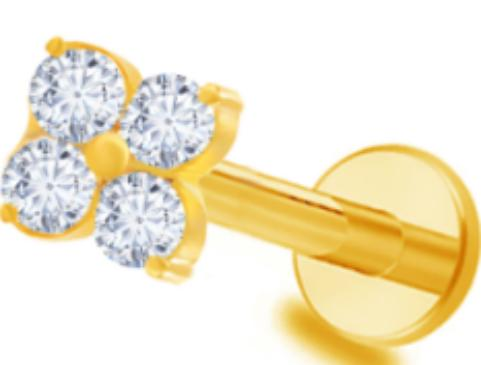
Choosing your first real pieces
Once your piercer confirms your piercing has healed, the fun part begins. With threadless, interchangeable tops, your first proper piece can be the start of a collection you build and restyle over time, all in the same safe titanium you healed in. When you are ready to plan a full look, my guide on building a curated ear will help. And if you have any questions along the way, ask your piercer, because no question about your own healing is ever too small.
How much does it actually hurt
This is the question everyone wants answered honestly, so here it is. For most people a piercing is a brief, sharp sensation that is over in a second or two, followed by a warm throb that eases fairly quickly. Lobes are generally very manageable and are a gentle place to start. Cartilage piercings such as helix or conch tend to feel a bit more intense and can be tender for longer afterward, simply because cartilage is firmer tissue. The anticipation is usually worse than the moment itself, and a calm, experienced piercer makes a real difference to how the whole thing feels.
Everyday life while it heals
You can carry on with normal life, with a few sensible adjustments. Showering is fine, and letting clean water run over the piercing is good. Avoid swimming pools, spas, lakes and the ocean while it is healing, because that water can introduce bacteria. Be gentle with hair brushing, hats and headphones around a new ear piercing, and keep makeup, fake tan and hair products off the area. Change your pillowcase often, and keep your phone screen clean if you hold it to a pierced ear.
Sleep is the one that catches people out. If you have pierced one side, try to sleep on the other so you are not pressing on a fresh piercing all night. A travel pillow with a hole in the middle is a popular trick for cartilage piercings that need pressure kept off them.
Bumps happen, and usually settle
It is very common for a cartilage piercing to develop a small bump at some point during healing. Most of these are irritation bumps, often caused by a knock, sleeping on it, or jewellery that is catching, rather than an infection. The worst thing you can do is pick at it or panic and change the jewellery. Keep up your gentle saline routine, remove whatever is irritating it if you can identify it, and check in with your piercer, who can tell you whether it is a simple irritation bump or something that needs a different approach. Genuine infections are less common than people fear, but heat, spreading redness, throbbing pain and thick discharge are the signs that warrant prompt professional advice.
When can you change it or take it out
Patience really is everything here. Do not change the jewellery until your piercer confirms the piercing has healed, because swapping too early reopens the wound and invites problems. And remember that a healed piercing, especially in cartilage, can still shrink or close surprisingly fast if you leave the jewellery out for long, so if you love a piercing, keep something in it. When you are cleared to change, that is the moment your collection begins.
A realistic healing timeline
Timelines vary from person to person, but some general expectations help set your patience correctly. A lobe often feels comfortable within six to eight weeks, though it is still maturing underneath for a while after that. A helix or other outer cartilage piercing commonly takes somewhere in the range of three to six months and sometimes longer. Inner placements such as a conch, rook or industrial can take from six months to a year to fully settle. The surface always looks healed well before the inside is finished, which is the single biggest reason people run into trouble by rushing. Let your piercer, not the calendar, tell you when a piercing is truly ready.
The downsizing appointment
One appointment worth planning for is downsizing. Because your piercer fits a longer bar at first to allow for swelling, that bar becomes too long once the swelling goes down, leaving the jewellery to move around more than it should and sometimes causing bumps. A short visit to swap it for a correctly fitted length, usually after the first few weeks to couple of months, makes the piercing more comfortable and helps it finish healing neatly. Think of it as a normal part of the process rather than an optional extra.
Trusted sources
Two trusted resources are well worth bookmarking as you heal: the Association of Professional Piercers on piercing aftercare and on appropriate initial jewellery.
Gemma
Leave a Reply